
Associate Professor Stewart Sutherland: Understanding racism and gridlock in social-political change
Abstract
The 2023 Australian referendum, conducted on October 14, 2023, presented a pivotal question to the electorate: whether to amend the Constitution to recognise Aboriginal and Torres Strait Islander peoples by establishing an Indigenous Voice to Parliament. This proposed entity aimed to provide Indigenous communities with a formal mechanism to advise the government on policies impacting them.
Despite extensive national discourse and advocacy efforts, the referendum concluded with a majority “No” vote, as 60.1% of voters rejected the proposal. Polling one year before the referendum identified support for intention to vote yes at around 60%. This outcome underscores the inherent complexities and challenges associated with achieving constitutional recognition and reform in Australia.
Drawing from historical precedents, such as the gridlock observed during the same-sex marriage plebiscite in 2017, the gridlock on this issue was anticipated. Gridlock, in this context, refers to a situation where opposing sides on a social or political issue, such as the Indigenous Voice to Parliament, are entrenched in mutually suboptimal outcomes, unable to progress.
In our study, we surveyed Australians on their voting intentions (Yes/No/Undecided) for the 2023 referendum and followed up with the question, “Why do you feel the way you do about the Voice to Parliament?” Out of 2999 respondents, fewer than half (n=1205) responded to the follow-up question. Analysis of the responses revealed eleven themes, nine of which met the Oxford dictionary’s criteria for racism.
The presentation will explore why Australians remain entrenched in a cycle of racism, hindering progress in attitudes and perceptions towards Aboriginal and Torres Strait Islander peoples, ultimately contributing to the failure of the Voice to Parliament initiative.
Bio
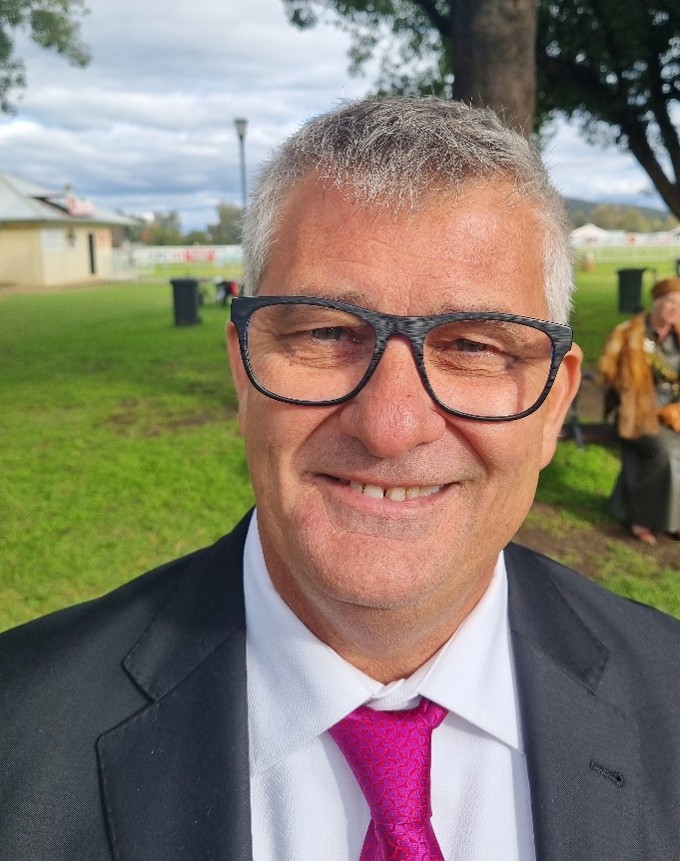 Associate Professor Stewart Sutherland was born and raised in Wellington area NSW the heart of Wiradjuri country. He is the Chair of the Indigenous Health Team, School of Medicine and Psychology, the Australian National University (ANU), where he and the team educate the doctors of tomorrow, to be able to work alongside Indigenous people, for better health outcomes. This work has led to him winning two teaching awards (2023 and 2024). Stewart finished his PHD, at the ANU, the focus of which was the interplay between reconciliation (apology) and the social emotional wellbeing of people forcibly removed from their families due to indigeneity.
For over a decade he worked in Indigenous health (Alcohol and other Drugs, Mental Health and Sexual Health). In more recent years focusing on identity and particularly Social and Emotional Wellbeing through the connection to culture. This has led to a focus on understanding the ways in which people think, and One Health. Stewart finished his PHD, at the Australian National University, Canberra, the focus of which was the interplay between reconciliation (apology) and the social emotional wellbeing of people forcibly removed from their families due to indigeneity.
About Seminar Series
The School of Psychology Seminar Series involves regular formal presentations of high-quality scholarly work with broad appeal.
The wider School community is invited to attend, including academic and professional staff, special guests, visitors, as well as HDR, postgraduate and honours students.

